
Welcome back, future Indian Statistical Service (ISS) officers!
Over the past three Parts, we have thoroughly decoded the modern architecture of the Indian Statistical System. In Part 1, we walked through the corridors of MoSPI and the National Statistical Office (NSO). In Part 2, we analysed the supreme watchdog, the National Statistical Commission (NSC). Finally, in Part 3, we explored the legal powers that drive data collection, such as the Collection of Statistics Act, 2008.
But a towering skyscraper does not simply appear out of nowhere; it requires a visionary architect and a remarkably strong foundation. Before MoSPI existed, before the NSC was conceptualised, and long before computers processed gigabytes of big data, there was just one man sitting in a small college room, visualising a data-driven future for an independent India.
Today, in the final blog of Module 1, we are going to step back in time. We are going to study the life, the scientific innovations, and the unmatched legacy of Prof. Prasanta Chandra Mahalanobis, universally revered as the Father of Indian Statistics.
For a UPSC ISS aspirant, this is not just a history lesson. Prof. Mahalanobis’s concepts, his growth models, and the institutions he built are heavily tested in your written examinations and are absolute favourite topics for the UPSC interview board. Let us dive deep into his legacy!
As you go through this guide, please share your queries or insights in the comments section below. I will be monitoring them personally to provide further clarity.
The Man Who Counted India: Early Life and Vision
Born on 29th June 1893 in Kolkata into a distinguished family, Prasanta Chandra Mahalanobis was not originally a statistician. He was educated at Presidency College in Kolkata and later at the University of Cambridge, where he developed a profoundly strong foundation in mathematics and physics.
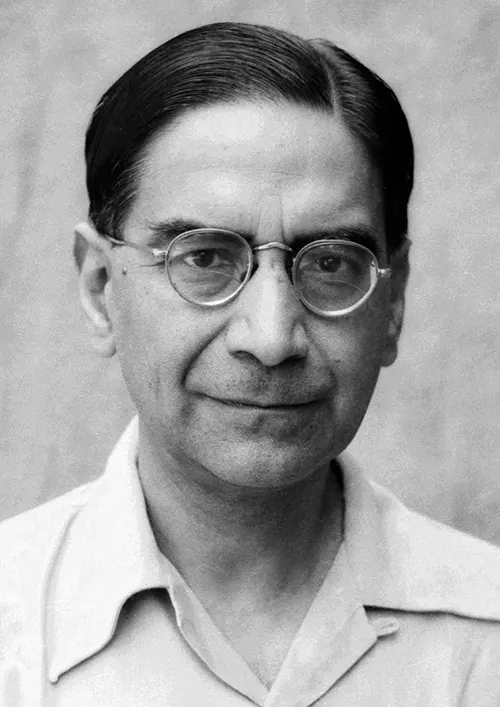
However, his academic trajectory took a historic turn when he discovered the fascinating world of statistics. He realised that statistics was not just a theoretical branch of mathematics, but a highly practical tool capable of solving real-world socioeconomic problems, guiding public policy, and aiding in national development.
In January 1949, recognizing his sheer brilliance, the Government of India appointed him as the first honorary statistical adviser to the Cabinet. He essentially became the ultimate architect of the statistical system for a newly independent India.
The Genesis of a Global Hub: Indian Statistical Institute (ISI)
Imagine starting a national institution with an annual budget that would not even buy a good meal today. Prof. Mahalanobis set up a modest “Statistical Laboratory” in Presidency College during the 1920s. During this period, almost all the statistical work done in India was executed single-handedly by him, analysing data ranging from meteorological conditions to soil and rainfall.
On 17th December 1931, this tiny laboratory formally blossomed into the Indian Statistical Institute (ISI). It was registered as a non-profit distributing learned society in April 1932.
The growth of ISI is one of the most inspiring stories in the history of global science:
- Humble Beginnings: In 1931, ISI operated with an annual expenditure of less than Rs. 250 and just one solitary human ‘computer’ working part-time.
- National Importance: Realising the phenomenal contribution of this institute, the Parliament of India passed the Indian Statistical Institute Act in 1959, officially recognising it as an “Institution of National Importance”. MoSPI acts as the nodal ministry ensuring its functioning under this Act.
- Modern Expansion: Today, what began in a small college room comprises vast campuses spread across the country, with headquarters in Kolkata and major centres in New Delhi, Bangalore, and Chennai, functioning through seven highly specialised divisions.
As an ISS officer, you will often collaborate with ISI experts, and MoSPI frequently relies on ISI for advanced training, methodological research, and analytical problem-solving.
Key Contributions to Statistics (High-Yield for ISS Exams)
Why is Mahalanobis celebrated globally? It is because he did not just apply statistics; he invented revolutionary methods that changed the discipline forever. Here are his top contributions that you must master for your exams:
1. The Mahalanobis Distance (D-Square)
If you are studying multivariate analysis, you already know this concept. Mahalanobis introduced the Mahalanobis Distance, a revolutionary statistical measure used to determine the distance between a point and a distribution.
- Why is it special? Unlike the simple Euclidean distance, the Mahalanobis Distance explicitly accounts for the correlations between multiple variables.
- Modern Relevance: Today, this concept is aggressively used in cutting-edge fields like Machine Learning, Data Science, pattern recognition, and anomaly detection. If you sit for your ISS interview, be prepared to explain the mathematical difference between Euclidean and Mahalanobis distances!
2. The Pioneer of Large-Scale Sample Surveys
Before Mahalanobis, governments around the world believed that to get reliable data, you had to count every single person or item (a complete census). Mahalanobis proved them wrong. He pioneered modern random sampling techniques, demonstrating mathematically that highly reliable and accurate data could be obtained from a well-designed representative sample, saving immense time and money.
- The Birth of NSS: His successful experiments laid the direct foundation for the establishment of the National Sample Survey (NSS) in 1950. The NSS was designed to fill massive data gaps for socioeconomic planning. (Connectivity Note: We will decode the exact methodologies of current NSS rounds in Module 5).
3. The Mahalanobis Growth Model
Mahalanobis was not just a statistician; he was a brilliant economic planner. The Government of India assigned ISI the monumental task of preparing the draft for the Second Five-Year Plan.
- Integrating statistical analysis with economic theory, he became the chief architect of the Second Five-Year Plan.
- This unique framework, heavily emphasizing rapid industrialisation and the development of heavy industries, became world-famous as the Mahalanobis Growth Model.
4. National Income Estimation
In 1949, the Government of India set up a High Powered Expert Committee called the ‘National Income Committee’ to compile the first official estimates of national income for the entire Indian Union. Prof. Mahalanobis chaired this historic committee, establishing the very roots of what is today the National Accounts Division (NAD) under MoSPI.
5. Sankhya Journal
To promote statistical research, he founded the internationally acclaimed statistical journal Sankhya and remained its dedicated editor until his final days.
The Legacy Continues: Current Affairs & Governance
The legacy of Prof. Mahalanobis and his contemporaries is kept vividly alive today through several government initiatives that you must quote in your subjective answers:
- National Statistics Day (29th June): To honour his unmatched contributions and to create public awareness about the importance of statistics in socio-economic planning, the Government of India celebrates his birth anniversary, 29th June, as ‘Statistics Day’ every year. The first Statistics Day was celebrated in 2007.
- National Awards in Statistics: MoSPI’s Capacity Development Division (CDD) manages highly prestigious awards to recognise modern excellence. These include the Prof. P.C. Mahalanobis International Award in Statistics for lifetime contributions by statisticians in developing countries, alongside the Prof. C.R. Rao Award and the Prof. P.V. Sukhatme Award. (Note: Prof. P.V. Sukhatme was the first statistical adviser to the Ministry of Agriculture and the pioneer of Agricultural Statistics in India).
Conclusion & What Lies Ahead?
Prof. P.C. Mahalanobis passed away on 28th June 1972, just one day shy of his 79th birthday. He envisioned statistics not merely as an academic pursuit, but as the most powerful instrument for solving real-world problems and uplifting a nation.
As you prepare to become an ISS officer, remember that you are stepping into the shoes of giants. The robust statistical machinery you will command tomorrow was built block-by-block by this visionary scientist.
Congratulations! You have successfully completed Module 1: The Architecture (System & Law). You now intimately understand the Ministry (MoSPI), the Watchdog (NSC), the Laws (Statistics Acts), and the History (Mahalanobis & ISI).
In our next phase, we are moving from theory to hard calculations. Get your calculators and concepts ready, because in Module 2: Economic Statistics (The Money Part), we will kick off with Part 5: National Account 101, where we will mathematically decode how India calculates its GDP, GVA, and National Income!
Keep revising, stay focused, and see you in Module 2!
Have a doubt about a specific Mahalanobis history? Ask in the comments below.
This article is part of our complete guide to Official Statistics for UPSC ISS. Bookmark the main guide for the full roadmap.
[…] our final blog of this module, Part 4: The Legacy – ISI & Mahalanobis, we will step back in time. We will meet the undisputed Father of Indian Statistics, Prof. P.C. […]