Part 12 : Programming Foundations III: Functions, Modules & Sorting Stability | Computer Series for UPSC ISS
Welcome back, future Indian Statistical Service (ISS) officers! Over the course of this series, we have journeyed through the entire landscape of the UPSC ISS Computer Applications syllabus. We started from the physical hardware and the Central Processing Unit, moved through memory management, explored the vast networks of the Internet, decoded complex number systems, and … Read more
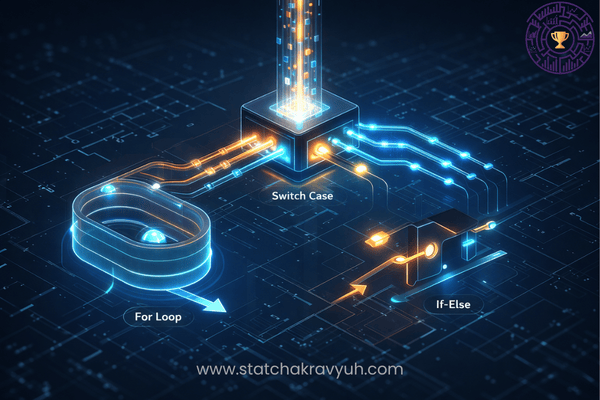
Part 11 : Programming Foundations II: Control Structures, Loops & Arrays | Computer Series for UPSC ISS

Welcome back, future Indian Statistical Service (ISS) officers! In our previous article, we explored the preliminary stages of software development, focusing on how algorithms and flowcharts are used to diagrammatically map out logic before a single line of code is written. We also discussed how language translators (Compilers and Interpreters) convert high-level human logic into … Read more

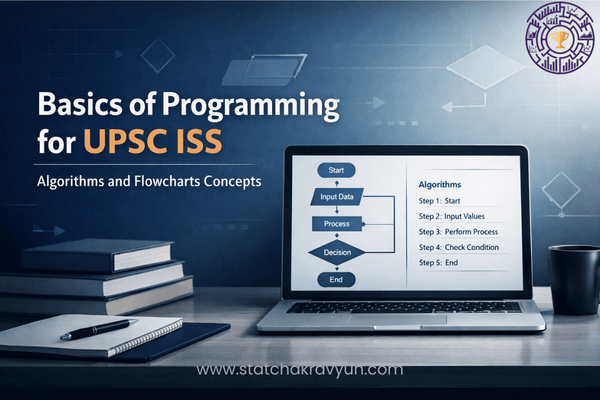
Part 10 : Programming Foundations I: Algorithms, Flowcharts & Translators | Computer Series for UPSC ISS

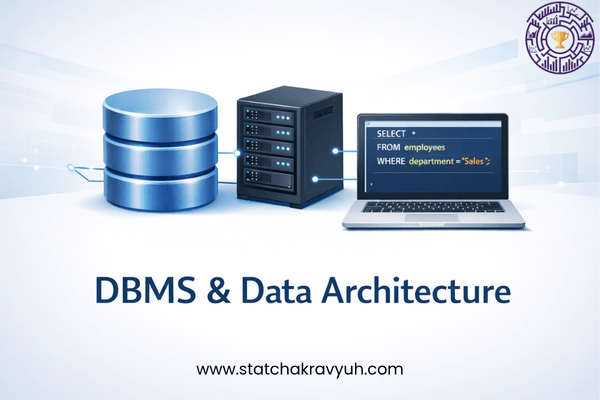
In our previous article, we mastered the backend, thoroughly exploring how Database Management Systems (DBMS) structure and secure massive datasets. Now that we understand hardware, networks, and databases, we must address the final major segment of the UPSC ISS syllabus: Basics of Programming. Many statistics aspirants panic when they see “programming” in the syllabus. Let … Read more

Part 9 : Database Management Systems (DBMS) & Data | Computer Series for UPSC ISS

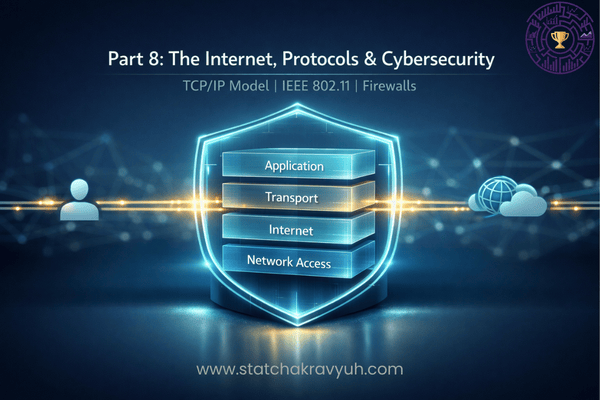
Welcome back, future Indian Statistical Service (ISS) officers! In our previous article, we explored the global digital sphere, understanding how the Internet operates, the protocols that govern data transmission, and how firewalls protect our networks from cyber threats. Now that we understand how data travels securely across the globe, we must address the next critical … Read more

Part 8 : The Internet, Protocols & Cybersecurity | Computer Series for UPSC ISS

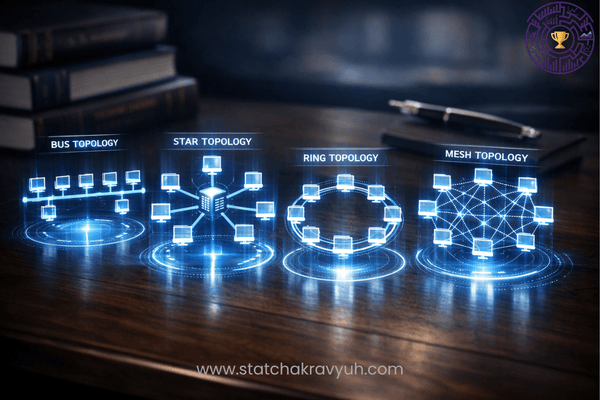
Welcome back, future Indian Statistical Service (ISS) officers! In our previous article, we successfully transitioned from the internal hardware of a computer to the concept of networking, exploring Local Area Networks (LANs) and the physical arrangements of Network Topologies. However, the modern digital landscape relies on computers communicating far beyond a single building or city. … Read more

Part 7 : Computer Networks & Local Topologies | Computer Series for UPSC ISS

Welcome back, future Indian Statistical Service (ISS) officers! In our previous article, we successfully decoded the mathematical core of the computer system: Number Systems and Conversions. We learned how a standalone processor manipulates data in binary, octal, and hexadecimal formats. However, in today’s highly integrated digital era, a computer rarely operates in isolation. Computers must … Read more

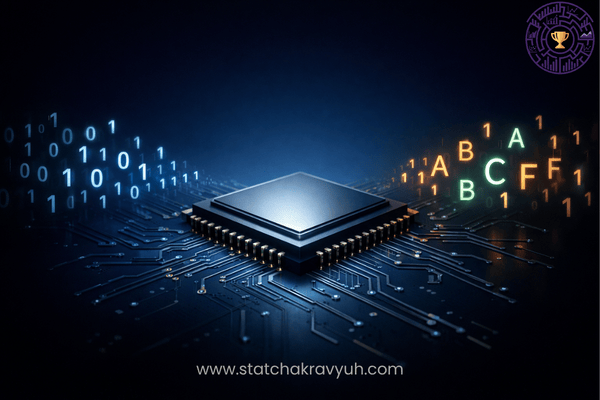
Part 6 : Demystifying Number Systems & Conversions | Computer Series for UPSC ISS

A professional graphic showing binary and hexadecimal number systems for UPSC ISS Computer Science preparation.

Welcome back, future Indian Statistical Service (ISS) officers! In our previous article, we navigated the invisible intelligence of the computer system: The Operating System (OS). We explored how the OS acts as a master manager, allocating the CPU using scheduling algorithms like Round Robin and FCFS. However, when the CPU finally receives a process to … Read more

Part 5: Operating Systems & CPU Scheduling | Computer Series for UPSC ISS

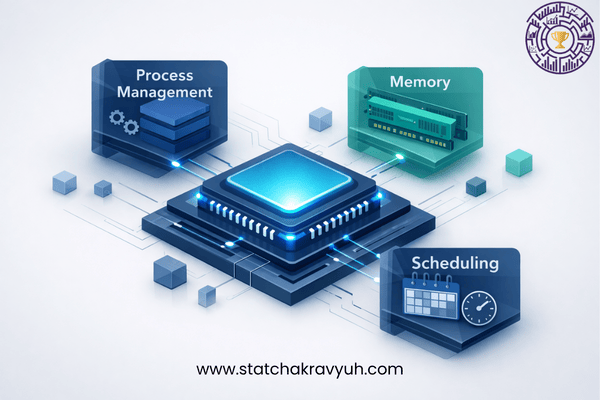
A professional 3D illustration representing Operating Systems for UPSC ISS, featuring CPU scheduling, process management, and system software concepts for Statistics students.

Welcome back, future Indian Statistical Service (ISS) officers! In our previous article, we decoded the software ecosystem, distinguishing between application packages that users interact with and the system software that manages the background tasks. We established that the most sophisticated hardware is essentially lifeless without system software to govern its operations. The absolute core of … Read more

Part 4: The Software Ecosystem – From Systems to Applications | Computer Series for UPSC ISS

An abstract layered diagram representing the software ecosystem including system software, utility programs, and application software for UPSC ISS exam study.

Welcome back, future Indian Statistical Service (ISS) officers! In our previous article, we successfully bridged the gap between the user and the machine by exploring Input, Output, and Peripheral devices. However, no matter how advanced a computer’s processor is, or how sophisticated its hardware components are, they are essentially useless without a set of instructions … Read more

Part 3: Interacting with the Machine – I/O and Peripherals | Computer Series for UPSC ISS

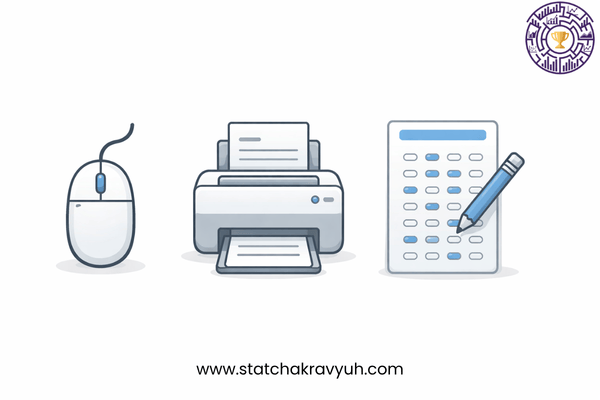
A clean flat vector illustration showing computer peripherals including an OMR sheet, a mouse, and a laser printer for UPSC ISS hardware syllabus.

Welcome back, future Indian Statistical Service (ISS) officers! In our previous article, we explored the internal architecture of computer memory, understanding how a system balances processing speed with storage capacity through RAM, Cache, and Solid State Drives. However, a computer system containing a powerful processor and massive storage is incomplete without a mechanism to interact … Read more