
Direct tax reform sets the tone, but every consumer in India also pays GST every single day. The 56th GST Council Meeting on 3 September 2025 gave us GST 2.0.
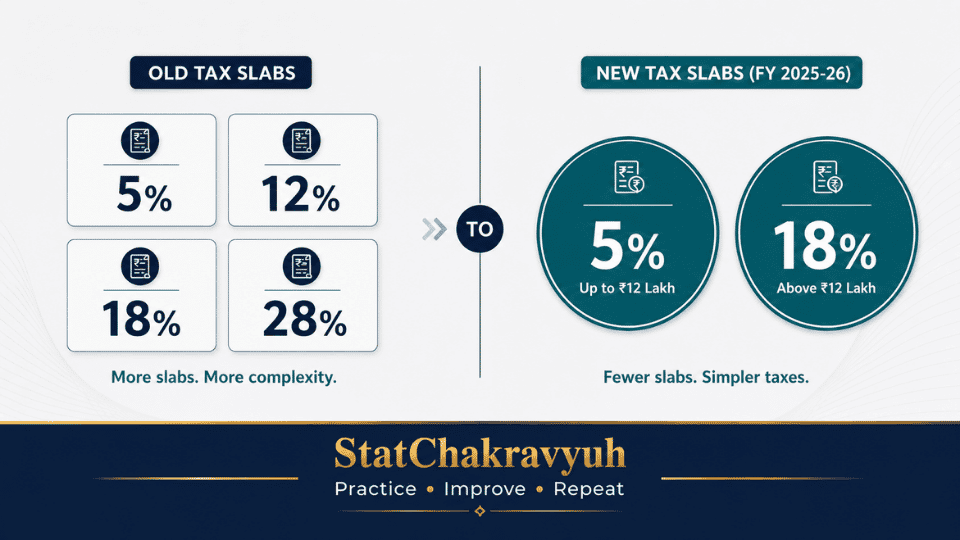
If you have followed Indian indirect taxation since 2017, you know that the four slab structure of 5, 12, 18, and 28 percent created endless classification disputes. GST 2.0 finally simplifies this. From 22 September 2025, India largely operates with two main slabs, 5 percent and 18 percent, plus a special 40 percent demerit rate for sin and luxury goods. This is one of the most testable economy topics of 2025-26.
The headline change in plain words
The 12 percent and 28 percent slabs are removed. Most goods that were earlier in the 12 percent slab move to 5 percent. Most goods in the 28 percent slab move to 18 percent. A new 40 percent demerit rate is created for sin and luxury items such as tobacco, pan masala, aerated beverages, and large premium cars. This was approved at the 56th GST Council Meeting in New Delhi.
What gets cheaper for the common household
Soaps, toothpaste, hair oil, kitchen items, small cars, motorcycles up to 350 cc, buses, trucks, and ambulances all see lower GST. Several Indian breads and essentials are exempt or moved to a much lower rate. Insurance, especially individual life and health insurance, is being moved to a more concessional treatment. The intent is to put more money in the hands of the middle class and boost consumption.
What becomes more expensive
Aerated beverages, caffeinated drinks, pan masala, gutkha, large premium cars, big motorcycles above 350 cc, and similar items now face the 40 percent slab. This dual approach reduces the burden on essentials while signalling a clear public health and revenue stance on harmful or luxury consumption.
Beyond rates, the institutional changes
The Goods and Services Tax Appellate Tribunal becomes operational. Pending appeals can be filed up to 30 June 2026. A simplified GST registration is automated within three working days for small and low risk businesses. Pre-filled returns, faster refunds, and a clearer post-sale discount framework reduce daily compliance pain for MSMEs.
Why this matters for ISS Economy
GST 2.0 ties together rate rationalisation, ease of doing business, fiscal revenue, and inflation. An ISS aspirant can use GST 2.0 as a ready example in answers on consumption, MSME formalisation, indirect tax design, and even the Atmanirbhar Bharat narrative.
Quick GST 2.0 Snapshot
| Aspect | Before GST 2.0 | After GST 2.0 |
| Main Slabs | 5, 12, 18, 28 percent | 5 and 18 percent (two slabs) |
| Special Slab | Compensation cess for sin goods | 40 percent demerit rate |
| Effective Date | Pre-September 2025 regime | Mostly from 22 September 2025 |
| Small Cars | 28 percent | 18 percent |
| Aerated Drinks | 28 percent plus cess | 40 percent |
| Appellate Tribunal | Not fully functional | Operational by late 2025 |
A Real Aspirant Story
Picture a small grocer named Suresh in Kanpur. Earlier he had to remember whether each toothpaste brand fell under 12 or 18 percent. Now both 5 and 18 percent are the only common rates he deals with. His billing software is simpler, classification disputes drop, and customers see lower prices on most household items. This is exactly what rate rationalisation is supposed to achieve in real life.
Quiz: GST 2.0 Reform
Q1. On which date was the 56th GST Council Meeting that launched GST 2.0 held?
(A) 15 August 2025
(B) 3 September 2025
(C) 22 September 2025
(D) 1 February 2025
Answer: (B) 3 September 2025. The 56th GST Council Meeting was held in New Delhi on 3 September 2025.
Q2. Which two main slabs form the core of GST 2.0?
(A) 5 and 12 percent
(B) 5 and 18 percent
(C) 12 and 28 percent
(D) 18 and 28 percent
Answer: (B) 5 and 18 percent. GST 2.0 largely operates with two main slabs, 5 percent and 18 percent.
Q3. What is the special demerit rate introduced for sin and luxury goods under GST 2.0?
(A) 28 percent
(B) 35 percent
(C) 40 percent
(D) 50 percent
Answer: (C) 40 percent. A 40 percent demerit rate was introduced for sin and luxury goods such as tobacco, pan masala, and aerated beverages.
Q4. Which two slabs were removed under GST 2.0?
(A) 5 and 18 percent
(B) 12 and 28 percent
(C) 5 and 28 percent
(D) 12 and 40 percent
Answer: (B) 12 and 28 percent. The 12 percent and 28 percent slabs were removed under GST 2.0.
Q5. From which date were most GST 2.0 rate changes made effective?
(A) 3 September 2025
(B) 15 August 2025
(C) 22 September 2025
(D) 1 November 2025
Answer: (C) 22 September 2025. Most GST 2.0 rate changes were made effective from 22 September 2025.
FAQs: GST 2.0 Reform
What is GST 2.0 reform in India?
GST 2.0 is a major overhaul of India’s indirect tax system that simplifies the structure into two main slabs of 5 percent and 18 percent, plus a 40 percent demerit rate for sin and luxury goods.
When was the 56th GST Council Meeting held?
The 56th GST Council Meeting was held in New Delhi on 3 September 2025 and launched the GST 2.0 reforms.
Which GST slabs were removed under GST 2.0?
The 12 percent and 28 percent slabs were removed, with most goods shifting to either 5 percent or 18 percent.
What is the 40 percent GST rate for?
The 40 percent demerit rate applies to sin and luxury goods such as tobacco, pan masala, aerated beverages, and large premium cars.
From when did GST 2.0 rates become effective?
Most GST 2.0 rate changes became effective from 22 September 2025, with sin goods retaining old rates pending compensation cess obligations.
Bridge to the Next Topic
When tax design gets cleaner and the economy stays resilient, global rating agencies notice. That is exactly why S&P upgraded India’s sovereign rating in 2025, after a long wait of 18 years. Read here