IIT JAM Statistics PYQ Analysis – Topic Trends, Difficulty Patterns, and What to Expect
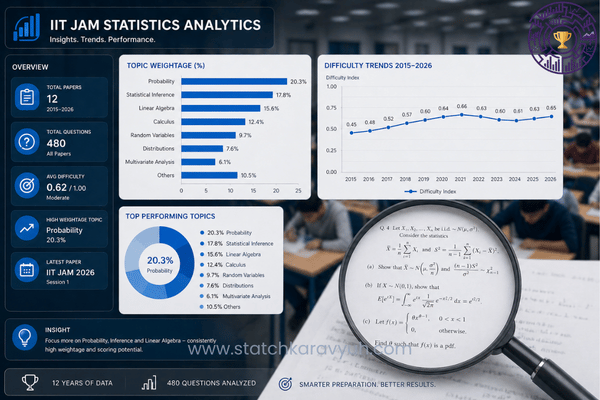
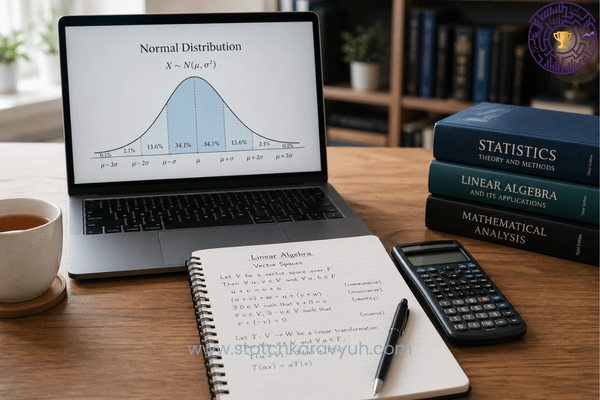
A data-driven infographic showing topic-wise marks distribution and trends from a decade of IIT JAM Statistics PYQ Analysis.

If there is one thing that separates a good JAM preparation from a great one, it is systematic PYQ (Previous Year Question) analysis. Previous year papers are not just practice material — they are a window into the examiner’s mind. They tell you what topics are favored, how questions are structured, and what level of … Read more
Part 5: Fundamental Rights vs Directive Principles: The Primacy Debate

Fundamental Rights vs Directive Principles The Primacy Debate | UPSC ISS GS PYQ | StatChakravyuh

Welcome to the final blog of Module 1! You have made it to Part 5, and I am incredibly proud of your consistency. Read last part here So far, we have understood the soul of our Constitution, its living nature, and the ultimate ‘Basic Structure’ shield. Today, we are going to witness an epic constitutional … Read more

GATE Statistics Preparation Strategy – How to Score 60+ and Secure a Top Rank

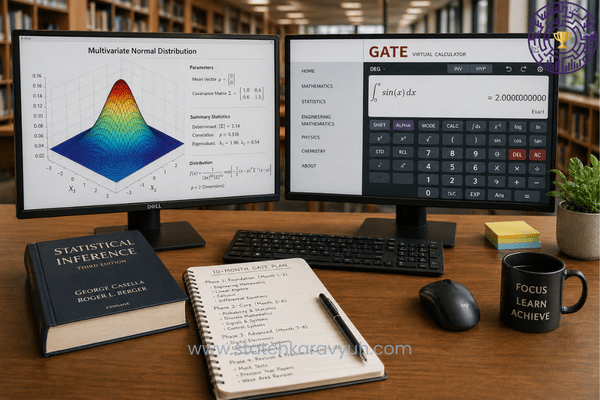
A comprehensive 10-month study plan and weightage guide for students following a GATE Statistics Preparation Strategy to score 60+ marks.

GATE Statistics (ST) is a paper that rewards systematic preparation. Unlike some GATE engineering papers where the competition pool is extremely large, GATE ST has a smaller but focused pool of candidates – which means a well-prepared student can realistically achieve a top 100 rank with consistent effort. But “consistent effort” needs direction. In this … Read more

IIT JAM Statistics Preparation Strategy — A Month-by-Month Plan That Actually Works

A month-by-month study roadmap and daily schedule illustrating an effective IIT JAM Statistics Preparation Strategy for MS aspirants.

Preparing for IIT JAM Mathematical Statistics can feel overwhelming when you look at the syllabus for the first time. It spans pure mathematics topics like real analysis, linear algebra, and differential equations — alongside heavy statistics topics like probability, distributions, estimation, and hypothesis testing. That is a lot of ground to cover. But here is … Read more

Part 4: The ‘Basic Structure’ Doctrine: Can Parliament Rewrite the Constitution?

_The 'Basic Structure' Doctrine Can Parliament Rewrite the Constitution | UPSC ISS GS PYQ | StatChakravyuh

Welcome back to Module 1! You are doing great. So far, we have understood how the Constitution adapts to changing times (Part 1), decoded its soul (Part 2), and analysed its explicit commitments to being Socialist and Secular (Part 3). Today, in Part 4, we are going to look at one of the most fascinating … Read more

Part 18: Environmental & Administrative Accounting – Valuing Nature and Unlocking Data

Flat vector design showing the integration of natural assets with standardized administrative metadata (NMDS 2.0).

Welcome, future Indian Statistical Service (ISS) officers, to the Grand Finale of our epic journey! Take a moment to absorb what you have achieved. Over the past 17 blogs, you have mastered the entire Indian Statistical System. You have conquered the complex architectures of MoSPI (Module 1), the rigorous mathematics of GDP and Inflation (Module … Read more

Part 3: Why ‘Socialist’ and ‘Secular’ Were Added to the Preamble

Why 'Socialist' and 'Secular' Were Added to the Preamble | UPSC ISS GS PYQ | StatChakravyuh

Welcome back to Module 1! I am thrilled to see you progressing. In our last part, we decoded the Preamble and saw how it acts as the identity card of the Constitution. Today, we are looking at two highly debated words on that identity card: ‘Socialist’ and ‘Secular’. Get ready, because this topic is not … Read more

Part 17: The Future & The Ethics – UNFPOS and Modernization

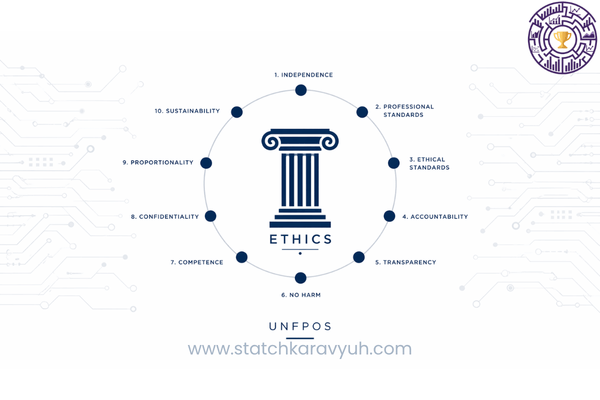
Minimalist iconographic representation of the 10 UN Fundamental Principles of Official Statistics and digital transformation.

Welcome back, future Indian Statistical Service (ISS) officers! Take a moment to look back at the phenomenal journey you have completed. We started by building the grand administrative machinery of MoSPI (Module 1), counted the nation’s wealth and industrial output (Module 2), walked through the agricultural fields (Module 3), tracked the human population and employment … Read more

Part 16: Global Goals – SDGs & Environmental Accounting

Professional minimalist graphic representing the 17 Sustainable Development Goals and environmental economic growth.

Welcome back, future Indian Statistical Service (ISS) officers! You have successfully entered our final frontier – Module 5: New Trends & Global Standards. Over the past four modules, we have tracked the nation’s wealth (GDP and Inflation), measured the output of our factories and farms, and counted our massive human and livestock populations. But in … Read more