Part 8 : The Internet, Protocols & Cybersecurity | Computer Series for UPSC ISS
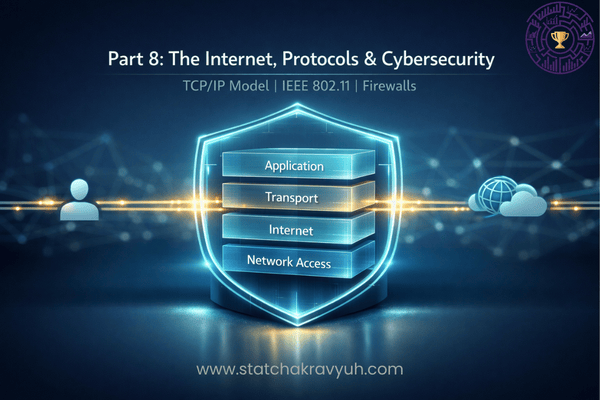
Welcome back, future Indian Statistical Service (ISS) officers! In our previous article, we successfully transitioned from the internal hardware of a computer to the concept of networking, exploring Local Area Networks (LANs) and the physical arrangements of Network Topologies. However, the modern digital landscape relies on computers communicating far beyond a single building or city. … Read more

Part 13: Health & Education – NFHS and U-DISE Explained

Infographic-style image representing Indian health and education data systems including NFHS and U-DISE plus.

Welcome back, future Indian Statistical Service (ISS) officers! In our previous session, Part 12: Vital Statistics, we decoded how the Office of the Registrar General of India (ORGI) tracks the continuous cycle of births and deaths through the Civil Registration System (CRS) and the Sample Registration System (SRS). We learned the formulas for Infant Mortality … Read more

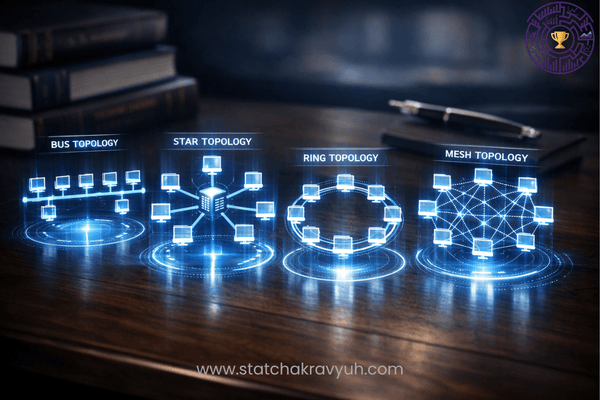
Part 7 : Computer Networks & Local Topologies | Computer Series for UPSC ISS

Welcome back, future Indian Statistical Service (ISS) officers! In our previous article, we successfully decoded the mathematical core of the computer system: Number Systems and Conversions. We learned how a standalone processor manipulates data in binary, octal, and hexadecimal formats. However, in today’s highly integrated digital era, a computer rarely operates in isolation. Computers must … Read more

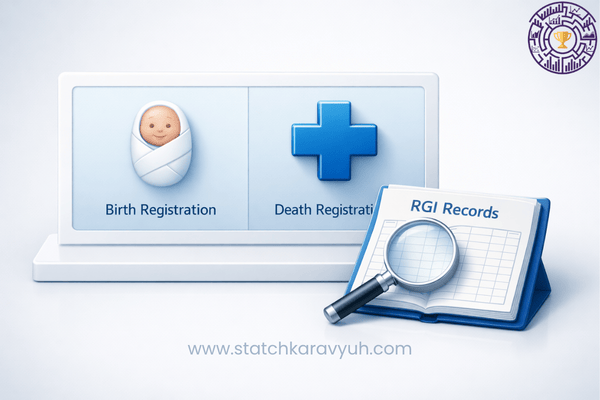
Part 12: Vital Statistics – SRS vs CRS

Comparison of Vital Statistics systems in India showing the difference between SRS and CRS for statistics students.

Welcome back, future Indian Statistical Service (ISS) officers! In our previous session, Part 11: The Grand Count, we kicked off Module 4: Social & Demographic Statistics by exploring the massive machinery behind the Population Census. We learned how the government counts 1.4 billion people and maps their housing and demographics every ten years. But here … Read more

Part 6 : Demystifying Number Systems & Conversions | Computer Series for UPSC ISS

A professional graphic showing binary and hexadecimal number systems for UPSC ISS Computer Science preparation.

Welcome back, future Indian Statistical Service (ISS) officers! In our previous article, we navigated the invisible intelligence of the computer system: The Operating System (OS). We explored how the OS acts as a master manager, allocating the CPU using scheduling algorithms like Round Robin and FCFS. However, when the CPU finally receives a process to … Read more

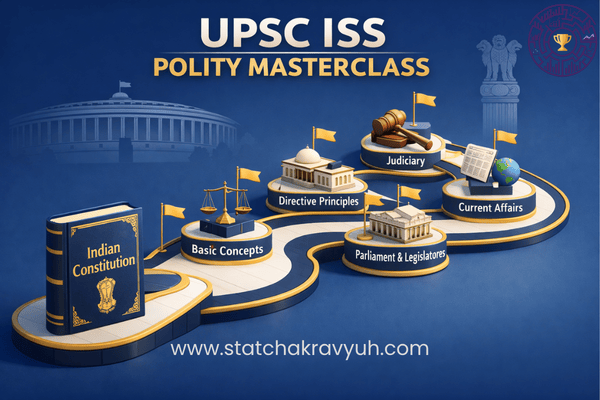
Mastering Polity for UPSC ISS: Our 24-Blog Roadmap (2014-2025 PYQs)

A 6-module roadmap for UPSC ISS Polity Preparation featuring the Indian Constitution and Parliament House, mapped to 2014-2025 PYQs.

Many UPSC Indian Statistical Service (ISS) aspirants spend the bulk of their time mastering Inference, Sampling, and Econometrics. While Statistics is the core, the General Studies (GS) paper often becomes the deciding factor in the final merit list. Within GS, Indian Polity is a high-yield section. If you understand the patterns of the last 10 … Read more

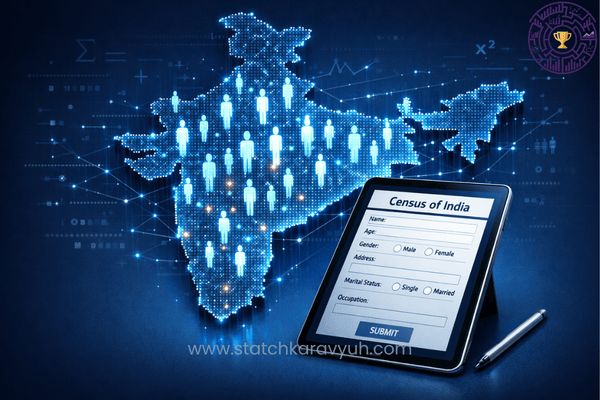
Part 11: The Grand Count – Population Census

A digital representation of the Population Census of India featuring a map and data enumeration tools for UPSC ISS preparation.

Welcome back, future Indian Statistical Service (ISS) officers! Take a moment to pat yourselves on the back. We have officially crossed the halfway mark of our journey! In Module 1, we built the grand administrative architecture of MoSPI and the NSO. In Module 2, we chased the money, decoding GDP, Inflation, and Industrial output. In … Read more

Part 5: Operating Systems & CPU Scheduling | Computer Series for UPSC ISS

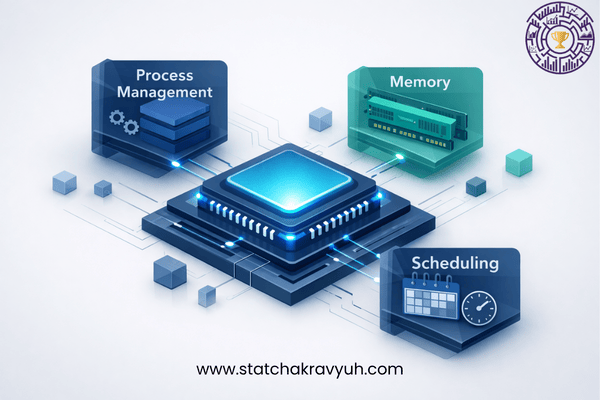
A professional 3D illustration representing Operating Systems for UPSC ISS, featuring CPU scheduling, process management, and system software concepts for Statistics students.

Welcome back, future Indian Statistical Service (ISS) officers! In our previous article, we decoded the software ecosystem, distinguishing between application packages that users interact with and the system software that manages the background tasks. We established that the most sophisticated hardware is essentially lifeless without system software to govern its operations. The absolute core of … Read more

Part 4: The Software Ecosystem – From Systems to Applications | Computer Series for UPSC ISS

An abstract layered diagram representing the software ecosystem including system software, utility programs, and application software for UPSC ISS exam study.

Welcome back, future Indian Statistical Service (ISS) officers! In our previous article, we successfully bridged the gap between the user and the machine by exploring Input, Output, and Peripheral devices. However, no matter how advanced a computer’s processor is, or how sophisticated its hardware components are, they are essentially useless without a set of instructions … Read more

Part 10: The Census of Land & Animals

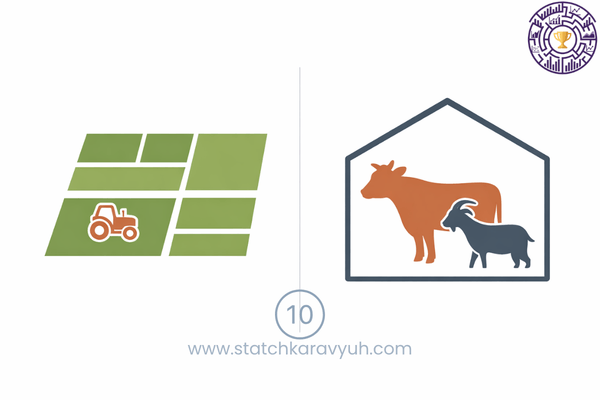
A professional graphic illustrating an agricultural land map (Operational Holding) alongside livestock icons, representing the two major Indian rural censuses.

Welcome back, future Indian Statistical Service (ISS) officers! You have successfully reached the grand finale of Module 3: Agricultural Statistics. In our previous session (Part 9), we walked through the fascinating fields of India, learning how the government estimates the area sown and the total crop yield using traditional Patwaris (TRS/EARAS) and scientific Crop Cutting … Read more