
Notes Kaise Banayein Jo Revision Mein Actually Kaam Aayein
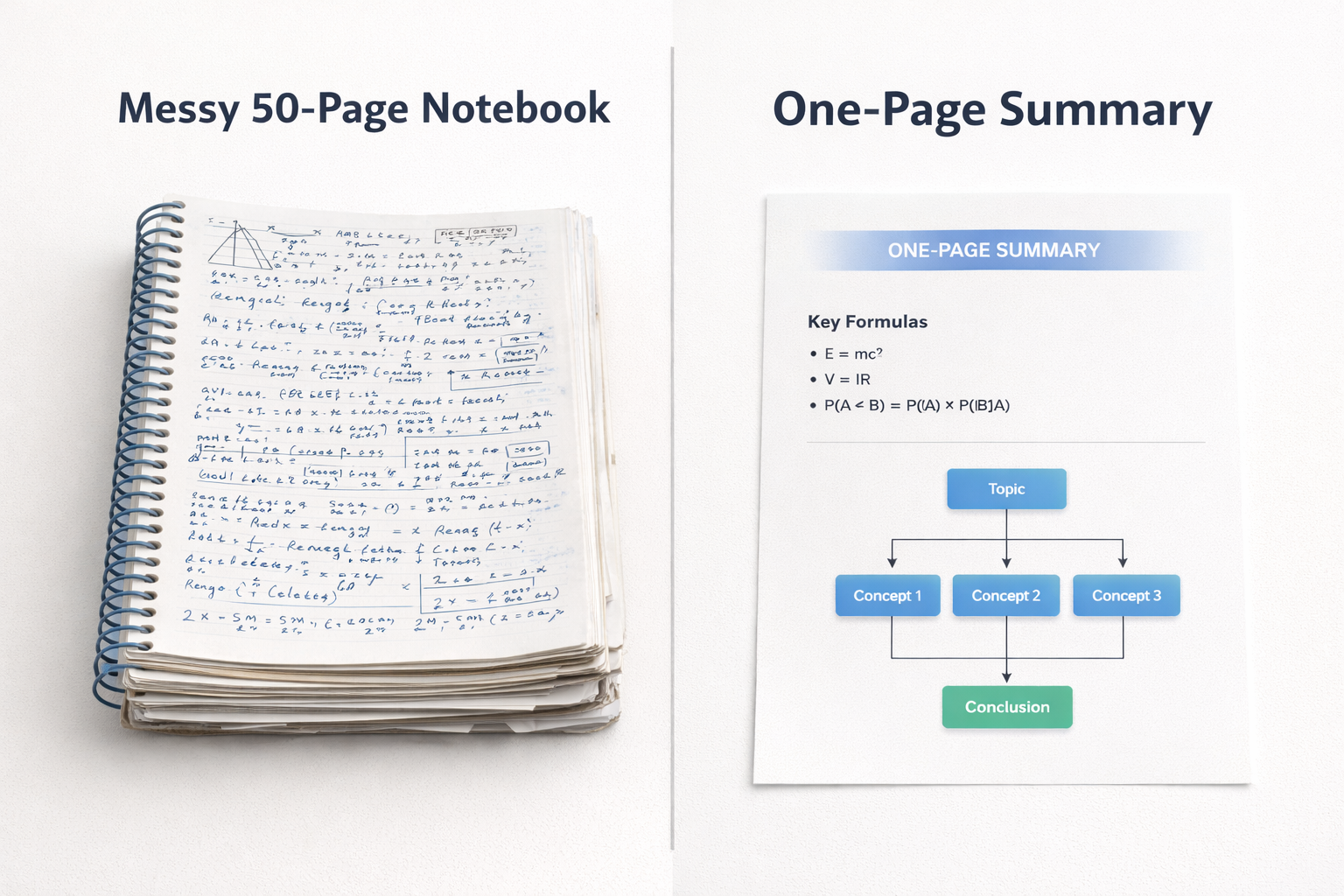
50 page ke notes banaoge toh revision mein 50 page padne baithoge. Ek page ka note banaoge toh 2 minute mein poora topic revise ho jaayega. Smart notes banana seekho.
Bahut se students notes banate hain – colourful pens se, neat handwriting mein, page after page. Lekin jab exam ke 15 din pehle revision ka time aata hai toh unke paas 300 page ke notes hote hain jise padhna apne aap mein ek project hai. Yeh notes nahi hain – yeh textbook ki doosri copy hai. Aur exam revision ke liye useless hai.
Aaj ki blog mein hum samjhenge ki notes ka purpose kya hona chahiye, kaise banayein ki revision lightning-fast ho, aur kaise notes ko practice ke saath combine karein taaki exam mein actual performance improve ho. Yeh Blog 4 hai humari series ka – agar pehle ke blogs nahi padhe toh neeche links hain.
Pehle Samjho: Tumhare Notes Kyun Kaam Nahi Kar Rahe
Notes banana ek passive activity hai jab tak tum isse intentionally active nahi banaate. Zyaadatar students ka notes banana matlab hai: teacher ya video sun ke wahi likh dena. Yeh basically transcription hai, learning nahi. Research (Dunlosky et al., 2013 meta-analysis) clearly kehti hai ki summarization aur re-reading sabse kam effective study strategies hain. Aur traditional notes essentially yahi hain — ek summarized version jo tum baad mein re-read karte ho.
❌ Notes Jo Kaam Nahi Karte
- Book ka paraphrase – wahi cheez thoda alag words mein
- Bahut lamba – 1 topic ke 10-15 pages
- Sirf text – koi visual, diagram, ya connection nahi
- Copy karna – bina samjhe teacher ka board utar dena
- Ek baar banate hain, phir kabhi update nahi karte
- Colorful dikhte hain lekin content generic hai
✅ Notes Jo Actually Kaam Karte Hain
- Apne words mein – brain ne process karke likha
- Compact – 1 topic ek page mein maximum
- Visual – diagrams, flowcharts, tables, mind maps
- Active recall se bane – pehle yaad karo, phir likho
- Living document – test ke baad update hote rehte hain
- Questions include karte hain, sirf answers nahi
Socho – Meera, UPSC ISS Statistics ki prep kar rahi hai. Usne Probability ka chapter padha aur 12 page ke detailed notes banaye – definitions, theorems, proofs sab likha. Exam ke 2 hafte pehle jab revision shuru kiya, toh 12 pages dekh ke hi overwhelm ho gayi. Usne notes khol ke padhe – lekin yeh toh basically chapter dobara padhna tha. Koi time save nahi hua. Agar usne ek page ka summary note banaya hota – sirf key formulas, tricky points, aur common mistakes – toh woh 5 minute mein poora Probability revise kar leti.
4 Types of Smart Notes Jo Tumhe Banana Chahiye
Ek hi type ke notes sab ke liye kaam nahi karte. Tumhe 4 alag types ke notes chahiye – har ek ka ek specific purpose hai. Yeh system lag sakta hai initially, lekin ek baar set ho gaya toh revision time 80% kam ho jaayega.
Active Recall Notes — “Kitaab Band Karke Likho”
Yeh tumhare primary study notes hain. Inhe banane ka tarika simple hai: ek topic padho, kitaab band karo, ek blank page lo, aur jo yaad hai woh apne words mein likho. Definitions mat copy karo – explain karo jaise kisi friend ko bata rahe ho. Phir kitaab kholke check karo ki kya miss hua – woh missing parts red pen se add karo.
Yeh method kyun kaam karta hai? Kyunki jab tum actively yaad karke likhte ho, toh brain ko retrieval practice hoti hai – yahi woh process hai jo long-term memory banata hai. Research dikhati hai ki yeh re-reading se 50% zyada effective hai memory retention ke liye.
Page ko do columns mein divide karo. Left column (30%): Questions aur cue words likho – “Bayes Theorem kya hai?”, “Conditional probability ka formula?”, “Kab use hota hai?” Right column (70%): Answers apne words mein likho. Revision ke time left column dekho, answer yaad karo, phir right column se check karo. Yeh basically Cornell Notes method hai – aur yeh incredibly effective hai.
One-Page Summary – “Poora Topic, Ek Page”
Yeh tumhara revision weapon hai. Har topic ka ek single page summary banao jisme sirf yeh ho: key formulas, important theorems (sirf naam aur statement, proof nahi), tricky points jo exam mein aate hain, aur common mistakes. Agar ek page mein nahi aa raha, toh tum bahut zyada likh rahe ho.
Constraint hi iska power hai. Jab tumhe ek page mein fit karna hota hai, toh brain ko prioritize karna padta hai – kya important hai, kya nahi. Yeh prioritization process itself learning hai.
📐 Probability — One-Page Summary (Example)
Key Formulas
P(A∪B) = P(A) + P(B) – P(A∩B) · P(A|B) = P(A∩B)/P(B) · Bayes: P(Aᵢ|B) = P(B|Aᵢ)P(Aᵢ) / ΣP(B|Aⱼ)P(Aⱼ)
Tricky Points
→ “At least one” = 1 − P(none) · → Independent ≠ Mutually Exclusive (common trap!) · → Conditional probability mein denominator sample space change hota hai
Common Mistakes (from DPP/Tests)
→ Bayes mein prior aur likelihood confuse karna · → P(A∩B) = P(A)·P(B) sirf independent ke liye, har jagah nahi · → Counting problems mein with/without replacement miss karna
PYQ Pattern
→ GATE: Mostly Bayes theorem + total probability (har saal 1-2 questions) · → JAM: Conditional probability + random variable transformation
Dekho – poora Probability ka core ek chhote se box mein aa gaya. Exam ke din subah yeh ek page dekho, 3 minute lagenge, aur poora topic refresh ho jaayega. Yahi hai smart notes ka power.
Mistake Journal — “Galtiyon Ki Diary”
Yeh shayad tumhara sabse valuable notebook hoga. Ek alag notebook ya section rakho jismein sirf woh questions likho jismein galti hui – DPP mein, quiz mein, ya mock test mein. Har entry mein teen cheezein likho: (a) Question kya tha, (b) Galti kya ki, (c) Sahi approach kya thi aur kyun.
Exam se pehle yeh notebook puri padho. Tum dekhoge ki tumhari 70-80% galtiyan repeat hoti hain – same types ke mistakes baar baar. Jab tumne unhe identify karke likh liya, toh exam mein woh galtiyan dramatically kam ho jaayengi.
Mistake journal tabhi kaam karegi jab tum regularly practice kar rahe ho — DPP, quizzes, tests. Agar practice hi nahi kar rahe toh mistakes identify hi nahi hongi. Isliye Blog 3 mein humne Practice Pyramid discuss kiya tha – woh pehle padho agar nahi padha. Notes aur practice ek doosre ke bina incomplete hain.
Formula Sheet – “Quick Access Card”
Yeh one-page summary se alag hai. Yeh sirf formulas, identities, aur key results ka ek collection hai – bina kisi explanation ke. Ek subject ki poori formula sheet 2-4 pages mein aa jaani chahiye. Ise laminate karwa lo ya phone mein photo le lo. Roz 5 minute ise dekho – spaced repetition automatically ho jaayegi.
Formula sheet ka use: daily quick revision (subah ya sone se pehle), DPP karte waqt reference ke liye (pehle bina dekhe try karo, phir check karo), aur exam se ek raat pehle last look.
Spaced Repetition – Notes Ka Superpower
Notes bana liye – great. Lekin agar revision nahi kiya toh sab bhool jaoge. German psychologist Hermann Ebbinghaus ne 1885 mein “Forgetting Curve” discover ki thi — bina revision ke tum 1 din mein 70% aur 1 hafte mein 90% bhool jaate ho. Lekin agar tum specific intervals pe revise karo, toh same information long-term memory mein permanently store ho jaati hai. Isse Spaced Repetition kehte hain.
Har baar jab tum kuch revise karte ho, toh forgetting curve flatten hoti hai – matlab tum zyada der tak yaad rakhte ho. Pehli revision ke baad 2 din yaad rehta hai. Doosri ke baad 5 din. Teesri ke baad 2 hafte. Chawthi ke baad 1 mahina+. Har revision progressively kam effort maangti hai – isliye pehle mushkil lagta hai lekin baad mein 2 minute mein poora topic revise ho jaata hai.
Practical Spaced Repetition Schedule
Jab bhi koi naya topic padho, toh uski revision in intervals pe karo. Tumhe koi fancy app ki zaroorat nahi – ek simple calendar ya diary mein mark kar lo.
Is schedule mein notes aur practice saath saath chal rahe hain. Day 0 pe DPP, Day 3 pe quiz, Day 14 pe timed quiz, Day 30 pe unit test aur mock. Notes banane ka purpose sirf “likh ke rakhna” nahi hai – purpose hai ki revision + testing ka ek loop bane jismein tumhe regular feedback mile ki kya yaad hai aur kya nahi. Agar tumhare paas structured DPP aur quizzes nahi hain, toh is schedule ka testing wala part miss ho jaayega – aur wohi sabse important part hai.
Notes Aur Practice Ko Kaise Combine Karein — The Complete Loop
Bahut se students notes aur practice ko alag alag activities maante hain. “Pehle notes banaunga, phir practice karunga.” Yeh galat approach hai. Notes aur practice ek continuous feedback loop hain – dono saath saath chalni chahiye, ek ke bina doosra incomplete hai.
“Notes bataate hain ki kya samjha. Practice bataati hai ki kya apply kar sakte ho. Dono milke bataate hain ki exam mein kya hoga.”
The Loop: Padho → Likho → Practice → Update → Repeat
Dhyan do – is loop mein Step 3 (Practice) aur Step 4 (Update) sabse critical hain. Bina practice ke tumhe pata hi nahi chalega ki tumhare notes mein kya missing hai ya kahan tumhari understanding surface-level hai. Aur bina update ke tumhare notes stale ho jaayenge – woh galtiyan repeat hongi jo pehle bhi hui thin.
Isliye hum apne students ko DPP (Daily Practice Problems) ke saath topic-wise quizzes provide karte hain – taaki har topic ke notes banane ke baad immediately test ho sake aur mistake journal update ho sake. Jab unit complete hoti hai toh unit-wise test se poore notes ki revision test hoti hai. Aur full-length mocks se sab kuch combined test hota hai. Yeh practice system tumhare notes ko ek living, evolving document banata hai jo har test ke baad better hota jaata hai.
Notes Banate Waqt 6 Common Galtiyan
🔴 Galti 1: Sab Kuch Likhna
Notes ka purpose textbook replace karna nahi hai. Agar tumhare notes 50+ pages hain ek subject ke liye, toh tum transcribing kar rahe ho, note-making nahi. Rule: agar koi cheez textbook mein dekh sakte ho 30 second mein, toh usse notes mein mat likho. Sirf woh likho jo tumhare liye specifically tricky ya important hai.
🔴 Galti 2: Notes Banake Chhod Dena
Notes banakar drawer mein rakh dena – yeh sabse common galti hai. Notes ka value revision mein hai, creation mein nahi. Agar tum spaced repetition se revise nahi kar rahe, toh notes banana time waste hai. Notes banaao aur use karo – regularly, systematically.
🔴 Galti 3: Digital vs Handwritten Ka Wrong Choice
Research (Mueller aur Oppenheimer, 2014 – “The Pen Is Mightier Than the Keyboard” study) dikhati hai ki handwritten notes zyada effective hain conceptual understanding ke liye. Kyun? Kyunki haath se likhna slow hai, toh brain ko paraphrase aur prioritize karna padta hai – yeh processing itself learning hai. Laptop pe notes lete waqt log verbatim transcribe karte hain bina process kiye. Lekin formula sheets aur quick reference cards ke liye digital theek hai – kyunki wahan formatting aur searchability matter karti hai.
Active recall notes aur one-page summaries: handwritten. Brain zyada engage hota hai. Formula sheets: digital (Google Docs ya Notion) bhi chalega – kyunki yeh frequently update hota hai aur searchable hona helpful hai. Mistake journal: handwritten. Galti likhne ka physical act brain mein zyada register hota hai.
🔴 Galti 4: Aesthetic Pe Zyada Focus
Instagram pe “study aesthetic” trend chal raha hai – 10 coloured pens, perfect handwriting, washi tapes. Yeh dekhne mein achha lagta hai lekin actual learning se koi relation nahi hai. Agar tum 2 ghante notes ko “pretty” banane mein laga rahe ho, toh woh 2 ghante padhai mein laga sakte the. Notes functional hone chahiye, pretty nahi. Ugly but useful > Pretty but useless.
🔴 Galti 5: Sirf Theory, Practice Se Disconnected
Jab notes mein sirf concepts aur formulas hain lekin koi example problem nahi hai, koi common mistake noted nahi hai, koi PYQ pattern mentioned nahi hai – toh woh notes exam ke liye incomplete hain. Best notes woh hain jinmein theory ke saath ek-do representative problems bhi hon, aur “yahan yeh galti commonly hoti hai” type warnings bhi hon. Yeh information tumhe DPP aur tests se milti hai – isliye practice ke baad notes update karna zaroori hai.
🔴 Galti 6: Ek Baar Final Notes Banana
“Pehle poora syllabus padhke notes banaunga, phir final revision.” Yeh approach fail hota hai kyunki jab tak tum syllabus khatam karoge, pehle ke topics bhool chuke hoge. Notes simultaneously bante chahiye – jaise padho, waise likho, waise practice karo, waise update karo. Notes ek living document hain jo poori preparation mein evolve hote hain.
Different Subjects Ke Liye Notes Strategy
📐 Maths / Statistics (GATE, JAM, ISS)
Maths mein notes matlab formula sheet + solved examples ka pattern recognition + common traps. Lengthy proofs apne notes mein mat likho (textbook mein dekh lena). Lekin proof ki key idea ek line mein zaroor likho – exam mein kabhi kabhi proof ka approach use hota hai problem solving mein. Har theorem ke saath ek example problem rakho jo us theorem ko apply karta hai. DPP mein jo tricky problems aaye, unka approach note karo – “Is type ke question mein pehle yeh check karo, phir yeh.”
📊 Data Analysis / ML (GATE DA)
Yahan notes mein algorithm comparisons (kab kaunsa use karein), hyperparameters, aur evaluation metrics ka ek quick reference table banao. Code snippets mat likho — woh Google pe mil jaayenge. Lekin conceptual understanding likho – “Random Forest kyun overfitting kam karta hai?” “Bias-variance tradeoff practically kaise dikta hai?” DPP mein jo numerical problems aaye unke approaches note karo.
📚 Descriptive / Theory Subjects (UPSC ISS, RBI)
Yahan one-page summaries sabse powerful hain. Har topic ka ek mind map ya flowchart banao — connections dikhao between concepts. “Yeh policy kyun aayi → iska impact kya hua → isse related kaunse current events hain.” Keyword-based notes banao – descriptive answers likhte waqt keywords yaad aane chahiye, paragraphs nahi. PYQ patterns note karo – “yeh topic har 2 saal mein aata hai”, “is topic se 10 marks ka question aata hai.”
Aaj Se Shuru Karo – 30 Minute Action Plan
Is poore blog ka saar ek simple action plan mein:
Perfect notes jaisi koi cheez nahi hoti. Imperfect notes jo tum regularly use karo >> Perfect notes jo drawer mein pade hon. Shuru karo, iterate karo, improve karo. Tumhare 10th revision ke notes tumhare 1st revision ke notes se 10x better honge – yeh natural hai. Process pe trust rakho.
“The best notes are not the prettiest – they are the ones you actually open again.”
Poori Blog Series Ka Summary — Ek Complete System
4 blogs mein humne ek complete study system build kiya hai. Yeh sab ek doosre se connected hai – koi bhi piece alone kaam nahi karega, lekin saath milke yeh ek powerful machine ban jaati hai.
Yeh 4 pillars hain: Plan → Focus → Practice → Revise. Agar tum in chaaron ko consistently follow karte ho — chahe coaching ho ya self-study — toh tum apne exam ke liye seriously prepared hoge. Talent nahi, systems matter karte hain. Aur ab tumhare paas woh system hai.
Notes Ke Saath Structured Practice Chahiye?
Notes banao toh humne sikha diya. Lekin notes ke saath practice ka loop complete karne ke liye tumhe chahiye DPP, topic-wise quizzes, unit-wise tests, aur full length mocks — jo hum GATE, JAM, UPSC ISS, RBI, aur GATE DA ke liye provide karte hain. Taaki tumhare notes hamesha updated rahein aur exam tak sharp.
WhatsApp Pe Details Maango