
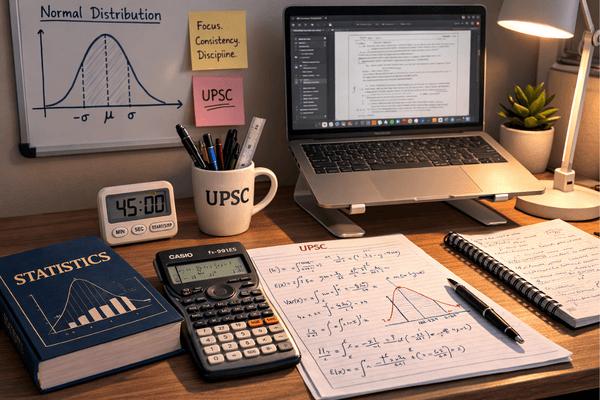
Preparing for high-level Statistics examinations in India, whether it is the UPSC Indian Statistical Service (ISS), IIT JAM, GATE, CUET, ISI, or CMI is a journey that demands more than just intelligence. It requires a disciplined environment and the right physical resources.
Many students focus solely on the syllabus but forget that their efficiency is often limited by the tools they use. As a mentor, I have noticed that students who organize their study space with specialized tools tend to have better retention and lower stress levels. In this guide, we will discuss the essential tools for Statistics aspirants that can bridge the gap between “studying hard” and “studying smart.”
1. The Core Library: Must-Have Statistics Books
The first and most critical of the essential tools for Statistics aspirants is a set of standard reference books. In the digital age, having physical copies of these “Bibles of Statistics” is vital for deep focus and quick reference.
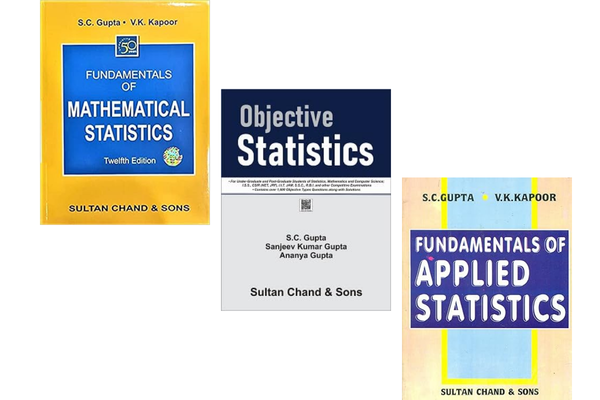
A. Fundamentals of Mathematical Statistics (FMS)
By S.C. Gupta and V.K. Kapoor, this book is the cornerstone of Statistics in India. Whether you are appearing for IIT JAM or the objective papers of UPSC ISS, FMS provides the theoretical depth required for probability, distributions, and inference. – View on Amazon
B. Fundamentals of Applied Statistics (FAS)
For students targeting the UPSC ISS or the applied sections of other Exam, FAS is indispensable. It covers Time Series, Index Numbers, Demand Analysis, and Vital Statistics with the specific Indian academic rigor required for these exams. – View on Amazon
C. Objective Statistics (S. C. Gupta)
The new edition of Gupta & Kapoor’s objective book is essential. Since exams like CUET and IIT JAM are MCQ-based, you need a book that trains your brain to solve problems quickly without getting lost in lengthy derivations. – View on Amazon
2. The Professional Calculator: Your Exam Partner
In most Statistics exams, particularly UPSC ISS Paper III and Paper IV, a non-programmable scientific calculator is permitted. Even for exams where they aren’t allowed in the hall, they remain essential tools for Statistics aspirants during the preparation phase to verify complex calculations.
- The Gold Standard: The Casio fx-991ES Plus. – View on Amazon
- Why it is essential: This calculator can handle matrix inversions, complex integration, and probability distribution values that are tedious to do by hand.
- Mentor Advice: Do not wait for the exam day to unbox your calculator. Use it daily so that “muscle memory” develops, allowing you to operate it at high speed during the actual exam.
3. Desktop Timer and Stopwatch: Beyond Just Mock Tests
While most students use a timer only for mock tests, a physical stopwatch is actually one of the most underrated essential tools for Statistics aspirants for daily theory and revision. – View on Amazon
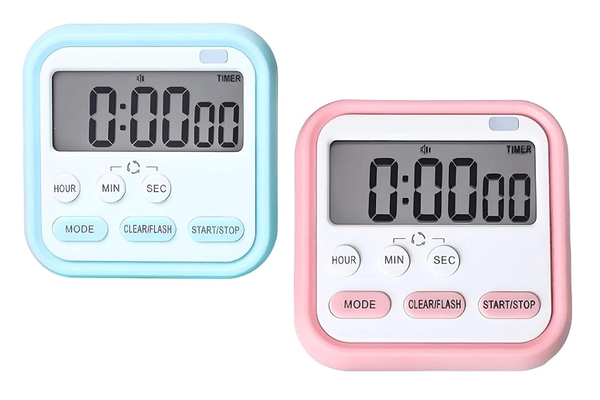
- The Distraction-Free Advantage: Using your phone as a timer is a trap. One notification can ruin a 2-hour study block. A dedicated desktop timer keeps you offline.
- Revision and Theory: Use the timer for the Pomodoro Technique (e.g., 50 minutes of intense theory reading followed by a 10-minute break). Tracking how much time you spend on a single derivation helps you identify which topics need more practice to improve speed.
- Discipline: Seeing the clock count down creates a “healthy pressure” that prevents procrastination during long revision sessions.
4. UPSC Format Stationery: Mastering the Descriptive Paper
For those specifically targeting the UPSC ISS, your writing practice must mimic the real exam environment. Standard A4 notebooks are not enough; you need specialized stationery.
- UPSC Format Margin Copies: The ISS descriptive papers (Paper III to VI and GS or English) have specific margins where you must fit your derivations and explanations. Practicing on “UPSC-style” unruled sheets with printed margins helps you learn space management, a crucial skill for scoring high marks. – View on Amazon
- OMR Sheets: For the objective papers, the physical act of “bubbling” an OMR sheet takes time and is prone to errors. Practicing on real OMR sheets ensures you don’t make costly mistakes under pressure. – View on Amazon
5. Whiteboard and Markers: For Active Recall
When dealing with complex Likelihood functions or intricate Probability proofs, a whiteboard becomes one of the most effective essential tools for Statistics aspirants.
The Daily Task List: Use your whiteboard to write down your “To-Do” reminders and core formulas that you need to memorize. Seeing these every time you look up from your desk reinforces your memory through passive learning.
Rough Work & Derivations: Instead of wasting heaps of paper on rough derivations, use a whiteboard. It allows you to visualize the flow of a proof more clearly.
6. Table Lamp: The Night Owl’s Essential
Many Statistics students find that the quiet of the night is the best time for solving heavy numerical problems. However, studying in a poorly lit room causes eye strain and fatigue.
- Rechargeable Options: A high-quality LED table lamp with adjustable brightness is a must. If you live in a hostel or share a room with family/friends, a lamp allows you to study without disturbing others.
- Focus: A lamp creates a “pool of light” on your book, which naturally cuts out peripheral distractions and helps your brain focus entirely on the page.
7. Ergonomic Laptop Stand: Protecting Your Health
Statistics preparation involves a lot of screen time, whether it’s watching StatChakravyuh lectures, attending online classes, or reading PDFs. This is why a laptop stand has become one of the essential tools for Statistics aspirants.
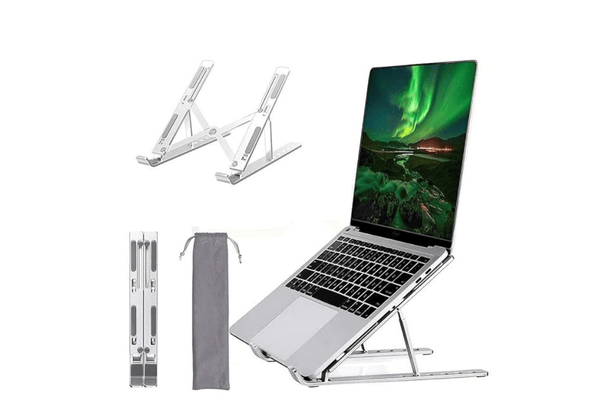
- Posture Correction: Looking down at a laptop for 8 hours a day leads to “Tech Neck” and back pain. An adjustable laptop stand brings the screen to eye level.
- Extended Study Hours: When you are physically comfortable, you can study for longer durations without getting tired. This simple addition to your desk can significantly improve your productivity over a 6-12 month preparation cycle.
Summary Table: The Aspirant’s Checklist
| Category | Recommended Tool | Primary Benefit |
|---|---|---|
| Books | FMS, FAS, Objective Statistics | Conceptual depth and MCQ practice. |
| Calculator | Casio fx-991 series | Speed in ISS Paper III & IV. |
| Focus | Physical Desktop Timer | Eliminating mobile distractions. |
| Writing | UPSC Margin Copies & OMR | Exam-day simulation and space management. |
| Visuals | Whiteboard & Markers | Quick derivations and daily tasks. |
| Lighting | Rechargeable Table Lamp | Night study without eye strain. |
| Health | Ergonomic Laptop Stand | Better posture for long study hours. |
Conclusion
Investing in these essential tools for Statistics aspirants is not an expense; it is an investment in your career. By removing small frictions, like a distracting phone, a messy desk, or poor posture, you clear the path for your mind to focus on what really matters: mastering the beautiful world of Statistics.
Organize your desk today, get the right tools, and give your preparation the professional edge it deserves.
Disclaimer: As an Amazon Associate, StatChakravyuh earns from qualifying purchases made through the links provided in this post at no extra cost to you.